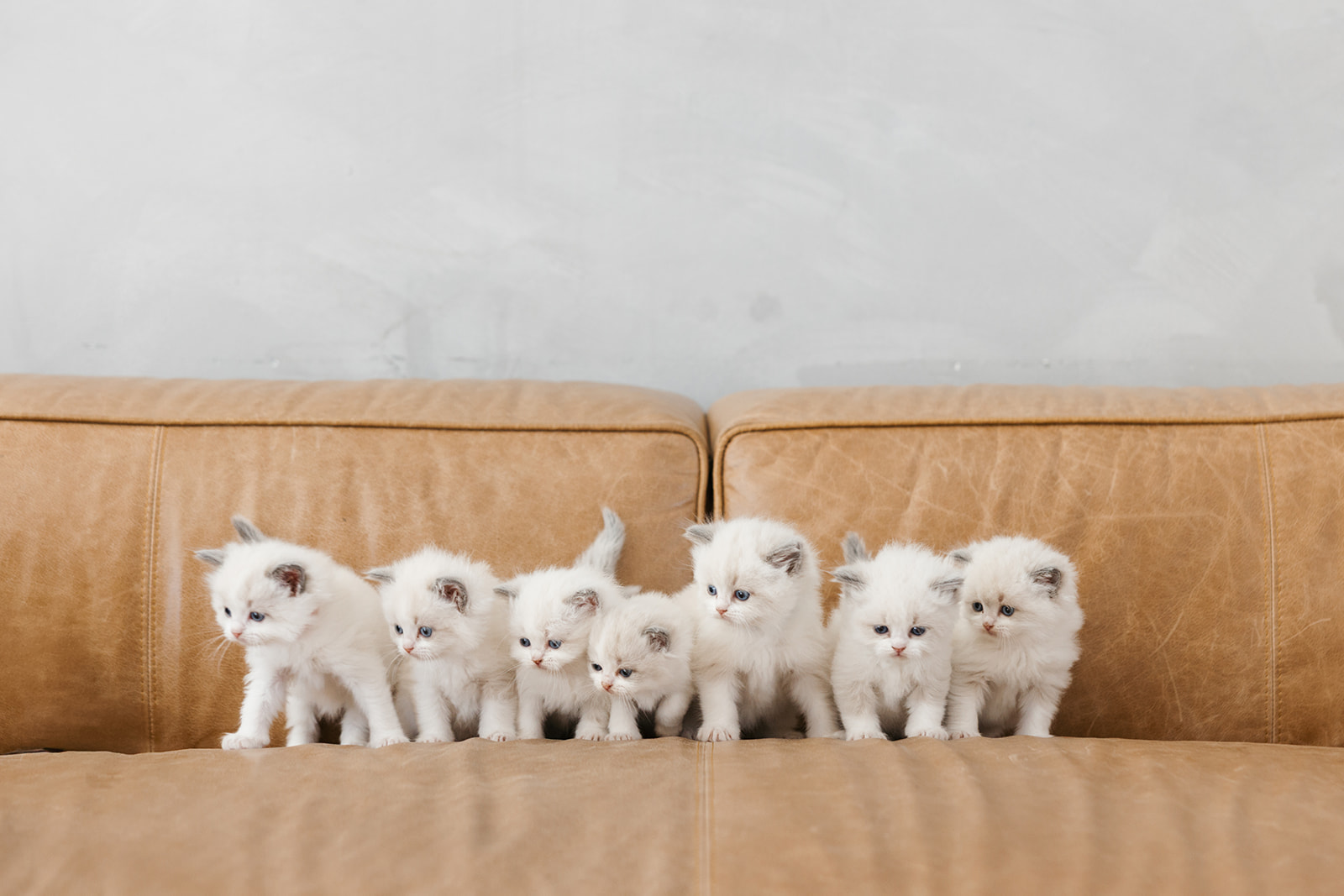
Ragdolls grow slower than most cats, maturing fully by 3–4 years. Their life stages – kittenhood, adolescence, adulthood, and senior years – each come with distinct needs for care, nutrition, and grooming. Here’s a quick breakdown:
- Kittenhood (0–12 months): Rapid growth, playful energy, and developing coat colors. Needs frequent feedings, vaccinations, and socialization.
- Adolescence (1–3 years): Physical and emotional maturity. Transition to adult food, regular grooming, and interactive play.
- Adulthood (3–10 years): Fully developed coat and calm personality. Focus on weight management, preventive care, and mental enrichment.
- Senior Years (11+ years): Age-related changes like slower movement and grooming challenges. Prioritize comfort, joint support, and regular vet checkups.
Ragdolls are known for their relaxed demeanor, semi-long silky coats, and striking blue eyes, which deepen as they age. To ensure their health and happiness throughout their 12–17-year lifespan, provide tailored care at every stage.
Understand the 4 Stages of Kittenhood
/
Ragdoll Life Stages Overview
Watching your Ragdoll grow from a tiny kitten into a fully developed cat is a fascinating journey, marked by specific milestones. Each stage of their life brings unique changes in behavior, physical development, and care needs, giving you a roadmap to understand and support your feline friend.
Ragdoll cats are unique in that they have an extended growth period, continuing to mature until they’re about 3 or 4 years old. These six distinct life stages provide a detailed look at their development, helping you tailor your care as your cat grows.
During the neonatal stage (birth to 2 weeks), kittens rely entirely on their mother, with closed eyes and ears. The kitten stage (2 weeks to 12 months) is a time of rapid growth, socialization, and the first signs of their iconic color patterns. By the junior stage (1 to 2 years), they begin to show more adult-like behaviors while still growing. Young adults (2 to 3 years) are nearly fully grown, though they continue to mature physically and emotionally.
The mature adult stage (3 to 10 years) is when your Ragdoll reaches its prime, with a fully developed coat, a stable personality, and consistent weight. Finally, senior cats (11+ years) experience age-related changes that require adjustments in care, such as more frequent vet visits and added comfort measures.
Each stage has its own set of characteristics, weight ranges, and care priorities. Ragdolls’ famously calm and gentle personalities emerge gradually, with their full temperament typically settling by age 3. The chart below offers a quick overview of what to expect at each stage.
Life Stage Comparison Chart
Life Stage
Age Range
Typical Weight
Key Characteristics
Primary Care Focus
Neonatal
Birth – 2 weeks
3-4 oz
Eyes/ears closed, nursing only
Mother’s care, warmth
Kitten
2 weeks – 12 months
2-12 lbs
Rapid growth, socialization, color development
Frequent feeding, vaccinations, play
Junior
1-2 years
8-15 lbs
Continued growth, increased independence
Spay/neuter, adult food transition
Young Adult
2-3 years
12-18 lbs
Near full size, personality forming
Regular vet visits, grooming routine
Mature Adult
3-10 years
10-20 lbs
Full development, stable temperament
Preventive care, weight management
Senior
11+ years
Variable
Slower movement, potential health issues
Frequent checkups, comfort adjustments
The weight ranges reflect the natural size differences between male and female Ragdolls. Males often reach the higher end of the scale, while females tend to be smaller. However, it’s important to remember that healthy cats can fall outside these ranges. Regular check-ins with your veterinarian can help ensure your Ragdoll is growing as expected.
As your kitten matures, their coat develops into the signature semi-long, silky fur, with their colors deepening over several years. Senior Ragdolls often seek out warmer spots, so keeping them cozy becomes more important as they age. Grooming also becomes more essential over time, with older cats sometimes needing extra help to maintain their luxurious coats.
Kittenhood: Birth to 12 Months
The first year of your Ragdoll’s life is an incredible period of growth and change. During this time, your tiny, helpless kitten will transform into a young cat, potentially weighing 10–12 pounds by their first birthday. This rapid development requires careful attention to their evolving needs and milestones.
Physical Growth and Development
Ragdoll kittens grow at a pace that sets them apart from many other breeds. While most cats reach their adult size by 12 months, Ragdolls are just beginning to develop their full potential.
Weight progression during the first year highlights the breed’s substantial build. Males tend to outgrow females, often weighing 2–3 pounds more at each stage. By six months, you can expect your kitten to weigh between 6–8 pounds, already hinting at their eventual size.
Coat development is another fascinating aspect of Ragdoll kittens. They’re born entirely white due to a temperature-sensitive gene, with their points – ears, face, legs, and tail – starting to show faint color around 2–3 weeks. These shades deepen gradually, and it can take several months for their full color pattern to emerge. In fact, their coat color may not completely stabilize until they’re 2–3 years old.
Eye color changes are equally striking. Around 6–8 weeks, their initial grayish-blue eyes start transforming into the deeper, brilliant blue that Ragdolls are known for. This vibrant hue typically develops fully between 12–18 months.
Your kitten’s body structure evolves noticeably during this stage. By 3–4 months, their legs grow longer, and their body becomes more proportionate. By six months, you’ll see the beginnings of their sturdy, muscular build, though they won’t achieve their full frame until later.
Socialization and Behavior Milestones
While their bodies grow, your Ragdoll’s behavior also undergoes significant development. The critical socialization period between 2–9 weeks is vital for shaping their personality. Positive interactions with humans, other pets, and different environments during this time help nurture the calm, trusting nature Ragdolls are famous for.
Play behavior starts to emerge around 3–4 weeks, as kittens interact with their littermates. These playful sessions teach essential social skills and hunting instincts. By 6–8 weeks, you’ll notice more coordinated behaviors like pouncing and mock fighting. Interactive toys like feather wands and small balls are excellent for encouraging healthy development.
Litter training typically begins around 4–5 weeks, as kittens mimic their mother. Most Ragdolls master litter box use by 6–8 weeks, though occasional accidents are normal during the learning phase.
The iconic Ragdoll floppiness – their relaxed demeanor when picked up – starts to show between 8–12 weeks. This trait will continue to develop as they grow, becoming more pronounced over time.
Vocalization patterns also take shape during kittenhood. Ragdoll kittens are generally quieter than other breeds, using soft chirps and trills to communicate their needs. By 4–6 months, you’ll start noticing their unique communication style.
Kitten Care Basics
As your Ragdoll kitten grows, their care needs will change significantly. Feeding requirements evolve quickly during this stage. For the first 4–5 weeks, kittens rely entirely on their mother’s milk. Weaning begins around 4–6 weeks, transitioning to high-quality kitten food mixed with milk replacer. By 8 weeks, they should be eating solid kitten food exclusively. Feed them 3–4 times daily until six months, then reduce to twice daily. Choose a premium kitten food with at least 30% protein and 9% fat to support their rapid growth.
Vaccination schedules are essential for protecting your kitten’s health. Typical timelines include the first FVRCP vaccine at 6–8 weeks, with boosters at 10–12 weeks and 14–16 weeks, along with a rabies vaccine between 12–16 weeks.
Spaying or neutering is generally recommended between 4–6 months, before sexual maturity. For larger breeds like Ragdolls, some veterinarians may suggest waiting until six months to ensure proper development.
Creating a safe environment is crucial as your kitten becomes more curious and mobile. Kitten-proof your home by securing wires, removing small objects, and blocking access to dangerous areas. Provide plenty of toys and scratching posts to channel their natural behaviors.
Early grooming habits are important, even though your kitten’s coat won’t require intensive maintenance until they’re older. Start with gentle brushing sessions to help them get used to being handled and to prevent matting as their adult coat develops.
Finally, be mindful of your kitten’s sleep patterns. Young kittens sleep 18–20 hours a day, with active periods occurring in short bursts. As they grow, they’ll gradually adopt more typical cat sleep schedules, remaining more energetic than adult Ragdolls throughout their first year.
Adolescence to Young Adult: 1 to 3 Years
As your Ragdoll moves from kittenhood into adolescence and young adulthood, you’ll notice their playful energy remains, but their appearance and personality begin to mature. This phase is all about refining the traits that make Ragdolls so cherished.
Physical and Coat Development
Ragdolls don’t stop growing after their first birthday. In fact, this is when their impressive size starts to become more apparent. By the time they reach three years old, males typically weigh between 15–20 pounds, while females range from 10–15 pounds. Unlike most cat breeds that finish growing by 12 months, Ragdolls continue to develop their muscular build and sturdy bone structure well into their third year.
Around 18 months, you’ll notice their chest broadens, their legs grow more robust, and their body takes on the signature rectangular frame that defines the breed. The transformation from their kitten days is striking.
Their coat also reaches its full glory during this time. Between 12–18 months, the silken, dense adult coat develops, offering better insulation and that irresistible softness Ragdolls are famous for. The contrast between their lighter body and darker points becomes more pronounced, creating those stunning patterns unique to each cat.
Even their facial features mature. Their cheeks fill out, giving them a rounded, sweet expression, while their ears, which might have seemed oversized as kittens, now appear perfectly proportioned to their fuller face.
Personality Changes
As their body matures, so does their behavior. Some of the most endearing personality traits of Ragdolls emerge during this phase.
By 18–24 months, their energy levels start to moderate. While they still enjoy playtime, their sessions become more focused and less chaotic. Instead of zooming around the house, they prefer interactive games with their favorite humans. This is also when their reputation for being "floppy" becomes more evident – they grow increasingly comfortable with being handled, cuddled, and carried.
Socially, young adult Ragdolls often form stronger bonds with their favorite people. They might start following you from room to room, earning their nickname "puppy cats." At the same time, they may become more selective about interactions, favoring certain family members while remaining friendly with others.
Their vocalizations also change. While Ragdolls are generally quiet, young adults often develop a soft, melodic way of communicating. You might notice distinct sounds for greetings, food requests, or attention.
Although they gain some independence, they remain people-oriented. They’ll explore their surroundings with curiosity, showing interest in high perches or new spaces, but they still prefer staying close to their humans. These subtle shifts in behavior make this stage particularly rewarding for building a deeper bond with your cat.
Updated Care Needs
As your Ragdoll grows, their care routine will need adjustments to match their changing body and coat.
- Grooming: Their adult coat requires daily brushing to prevent matting, especially in areas prone to tangles like the chest, under the arms, and back legs. A slicker brush works well for loose fur, while a metal comb can help with smaller tangles.
- Exercise: Provide sturdy cat trees that can support their size – look for ones rated for cats 20+ pounds. Interactive toys and puzzle feeders are great for keeping them mentally stimulated and preventing boredom-related overeating.
- Veterinary Care: Regular check-ups every 6–12 months are essential to monitor their growth and catch any potential health concerns early. This is also a good time to discuss dental care, as their adult teeth are fully developed, and maintaining oral hygiene is crucial.
- Environment: Make sure their litter box is large enough for their size – extra-large boxes work best. Elevated feeding stations can also make mealtime more comfortable for their larger frame.
- Mental Enrichment: Rotate toys often, provide window perches for birdwatching, and consider puzzle feeders to challenge their intelligence. Many Ragdolls enjoy learning tricks or commands, so this is a great time to introduce positive training sessions to strengthen your bond.
This stage of your Ragdoll’s life is a period of transformation, where their physical traits and personality truly shine. By adjusting their care routine, you’ll help them thrive as they grow into the affectionate, gentle companions Ragdolls are known to be.
sbb-itb-c26662c
Adulthood and Maturity: 3 to 10 Years
By the time your Ragdoll reaches three years old, they’re fully grown and have settled into their calm, affectionate personality. This is the phase where your focus shifts from supporting growth to maintaining their overall health and happiness. Your cat’s semi-long, luxurious coat is now fully developed, and their relaxed demeanor becomes a hallmark of their character. To keep them thriving, it’s important to adjust their care routine to match their needs in adulthood.
Keeping Your Adult Cat Healthy
Managing your Ragdoll’s weight is a key aspect of their care during this stage. With their naturally lower activity level, it’s important to monitor their body condition. You should be able to feel their ribs easily and notice a defined waistline – these are signs of a healthy weight. If you observe any changes, such as a loss of that waistline, it might be time to adjust their diet.
Stick to feeding controlled portions of high-quality food that suits their activity level. Always check the feeding guidelines on the packaging, and consult your veterinarian for personalized advice. Avoid free-feeding, as it can lead to overeating and weight gain.
While Ragdolls are known for their laid-back nature, regular exercise is still essential. Keep your cat active with interactive toys like feather wands, laser pointers, or puzzle feeders. These activities not only help maintain their physical health but also keep their minds engaged. Make sure they have cozy resting spots, as these gentle giants can sometimes experience joint strain.
Annual check-ups are vital for monitoring overall health. These visits often include tests to assess kidney and liver function, which become increasingly important as cats age. Don’t overlook dental care – regular vet visits and a home dental routine can help prevent problems like gum disease. Keeping their vaccinations current is another key step in supporting their long-term health.
Mental Stimulation and Grooming
Caring for an adult Ragdoll isn’t just about physical health – mental engagement plays a huge role in their wellbeing. Even as adults, Ragdolls retain a curious and playful nature. Short training sessions, such as clicker training, are a great way to challenge their minds while strengthening your bond. Rotate their toys regularly to keep things fresh, and use puzzle feeders to make mealtime more stimulating.
Their beautiful, soft coat requires consistent grooming to prevent tangles and manage shedding. A slicker brush and comb work well to keep their fur in top condition, especially in areas prone to matting, like under the chin and around the chest and legs. Grooming sessions can even become a calming, bonding experience for both of you.
Don’t forget about nail care. Regular trims are essential for claw health and will also save your furniture from scratches. If you introduce nail trimming early in their life, it’s much easier to maintain as they grow older. Providing a variety of scratching posts with different textures can also satisfy their natural urge to scratch.
During these years, your Ragdoll’s personality truly blossoms. Their gentle, loving nature makes them a joy to be around, and with the right care, they’ll continue to enrich your life for years to come.
Senior Years: 11 Years and Beyond
Once your Ragdoll reaches 11 years and beyond, you’ll likely notice some subtle shifts that come with aging. These gentle companions often age gracefully, but knowing what to expect can help you provide the care they need during this special phase of life. With proper attention, senior Ragdolls can enjoy their golden years well into their late teens.
Common Age-Related Changes
As they age, Ragdolls may face a few physical and behavioral changes. Mobility can become an issue – jumping onto furniture or climbing stairs might get harder, and they may favor lower spots for resting. You might also notice a decline in grooming, especially in areas like their back and hindquarters, which are harder for them to reach.
Eating habits can shift too. Some senior cats eat less due to a weaker sense of smell or dental discomfort, while others may gain weight because they’re less active. If your cat starts eating more slowly, dropping food, or preferring softer textures, it could be a sign of dental issues.
Sleep patterns are another thing to watch. While Ragdolls are already champion nappers, older cats may sleep even more – seeking out warm, soft spots for extra comfort. Their once-glossy coat might lose some shine and become prone to mats, particularly in areas they can’t groom as easily, like under their arms or around their chest.
You might also notice cognitive changes. A previously social Ragdoll could become more withdrawn or, on the flip side, clingier and more vocal. Some may seem confused at night or forget familiar routines, like where the litter box is located. These changes call for a bit of extra understanding and care.
Senior Cat Care Adjustments
To make life easier for your aging Ragdoll, small adjustments can go a long way. Pet ramps or stairs can help them reach their favorite spots without putting strain on their joints. Place litter boxes on every floor of your home, and consider switching to ones with lower sides for easier access.
When it comes to meals, focus on high-quality, easily digestible protein. Warming up their food can make it more aromatic and appealing, especially if their appetite has waned. For cats losing weight, this little trick can help, while overweight seniors may need a tailored weight-loss plan from your vet. In colder months, heated beds or blankets can provide extra comfort, while orthopedic beds offer support for achy joints.
Engage them in gentle play sessions that match their energy levels – feather toys or laser pointers are great options. Puzzle feeders can also keep their minds active during mealtime, offering both stimulation and fun.
Grooming assistance becomes more important as your Ragdoll ages. Daily brushing helps prevent mats and keeps their coat healthy, especially in areas they can’t reach. Some seniors may benefit from professional grooming every few months to maintain their coat and skin condition.
Frequent Vet Check-ups
Regular vet visits – ideally every six months – are crucial for senior Ragdolls. These check-ups help catch age-related conditions like kidney disease, diabetes, hyperthyroidism, and arthritis early, giving your cat the best chance for effective treatment.
Routine blood work is a key part of senior care, including tests like a complete blood count, chemistry panel, and thyroid function checks. These tests can uncover potential issues before symptoms appear, allowing for timely intervention.
Dental health deserves extra attention in their later years. More frequent cleanings may be necessary, depending on your vet’s recommendations. At-home care, such as dental treats or water additives, can help maintain oral health between professional cleanings.
Pain management often becomes a focus for senior cats, especially those dealing with arthritis. Your vet might suggest joint supplements, prescription pain relief, or even alternative therapies like acupuncture. It’s important to note that human pain medications are toxic to cats – always rely on your vet’s guidance.
Monitoring blood pressure is another essential step, as hypertension is common in older cats and can lead to complications if untreated. Your vet may also recommend keeping an eye on heart health, as cardiac issues can arise with age.
During these senior years, the goal is to prioritize comfort and quality of life. While your Ragdoll may not be as active as they once were, attentive care and regular veterinary monitoring can help them stay healthy and content through these cherished years.
Conclusion: Caring for Your Ragdoll Through Every Stage
Watching your Ragdoll grow and change over the years is a journey filled with joy and connection. Each phase of their life – from the energetic days of kittenhood to the slower, more serene senior years – comes with its own needs. Knowing what to expect and how to adjust your care can make a world of difference in keeping your Ragdoll happy and healthy.
As your Ragdoll matures, their needs will shift. What starts as playful chaos in kittenhood transforms into a calm, affectionate adulthood and eventually a gentle senior stage. By tailoring your care – whether it’s providing the right nutrition, adjusting grooming routines, or creating a comfortable environment – you can ensure they thrive at every age. Through it all, your cat will continue to rely on your love, attention, and thoughtful care.
Regular veterinary care is essential throughout your Ragdoll’s life. Early vaccinations set the foundation for good health, while annual heart ultrasounds starting at age two can help detect conditions like Hypertrophic Cardiomyopathy. For seniors, routine blood work and wellness exams can catch age-related issues, such as kidney problems, before they progress.
Grooming routines also need to evolve over time. While occasional brushing may suffice for kittens, shedding seasons may call for more frequent attention, and senior Ragdolls often benefit from gentle daily grooming to keep their coats in top shape. Paying attention to their changing needs ensures they stay comfortable and well-cared for.
You know your Ragdoll better than anyone. Subtle changes in their appetite, behavior, or mobility can signal it’s time to tweak their care or consult a vet. Whether that means switching to softer food for aging teeth or making sure they have a warm, cozy spot to nap, these small adjustments can greatly improve their quality of life.
Providing thoughtful, stage-specific care not only keeps your Ragdoll healthy but also strengthens the bond you share. Their affection and companionship are a constant reminder that the effort you put into understanding and meeting their needs is more than worth it.
FAQs
What are the signs that my senior Ragdoll might need changes in its care routine?
As your Ragdoll cat gets older, you might notice shifts in their behavior and physical condition that signal changing care needs. Pay attention to behavioral changes like increased meowing, withdrawal from social interaction, or a noticeable drop in activity levels. On the physical side, keep an eye out for signs such as weight loss, trouble moving around, or changes in their appetite. Other indicators, like excessive tiredness, confusion, or disrupted sleep patterns, could suggest underlying health concerns.
If you observe any of these signs, it’s a good idea to reach out to your veterinarian. They can help you adjust your Ragdoll’s care plan, which might include specialized nutrition, mobility support, or creating a cozier, more accommodating environment to ensure their comfort and well-being.